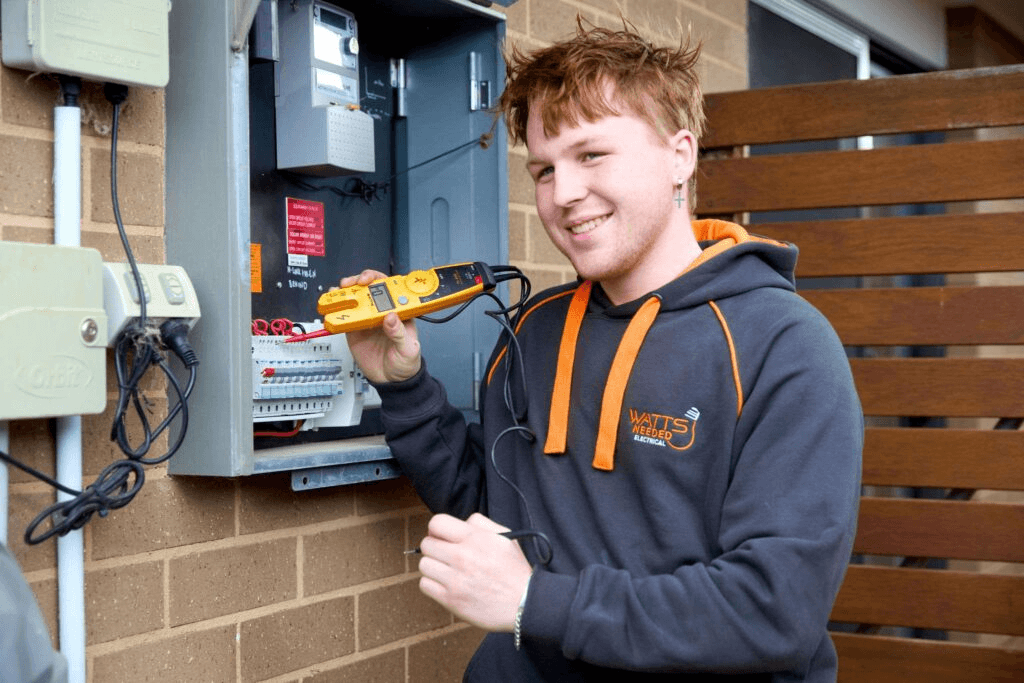
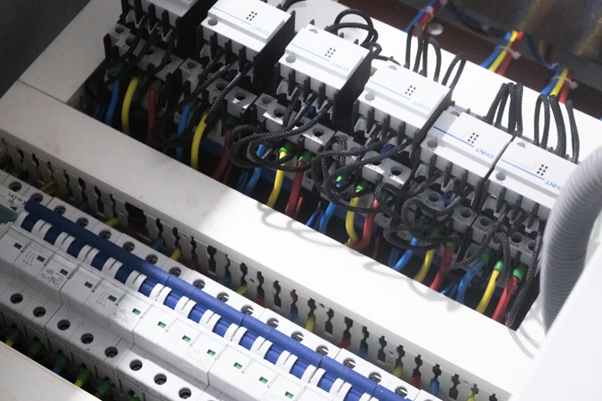
A breaker that keeps tripping is reacting to a fault, not failing. Find out what’s causing it and when to call a licensed Canberra electrician. Get in touch today.
It trips. You reset it. It trips again. At some point, that stops feeling like a fluke.
Here’s the thing: a breaker that keeps tripping isn’t broken. It’s reacting to something. Your home’s circuits each have a load ceiling, and the moment current pushes past it, from overload, a fault, or a failing component, the breaker cuts power. Fast. That’s the whole point of it.
One trip after running too many appliances? Normal. A breaker that won’t stay reset, or trips again within minutes of being flipped back on? That’s a fault that needs finding. Resetting it repeatedly doesn’t clear the problem. It just keeps restarting the clock on something that’s still there.
The Most Likely Causes
An Overloaded Circuit
This is the most common reason by a significant margin, and it’s usually the most straightforward to fix.
Every circuit in your home has a rated capacity, typically 10 or 15 amps for general circuits, higher for dedicated ones. When the combined draw of everything running on that circuit exceeds that rating, the breaker trips. It’s not a fault in the wiring. It’s just too much demand on one line.
The giveaway is a pattern. If the breaker trips every time you run the heater and the microwave together, or every time the washing machine hits its spin cycle while the dryer is going, that’s an overload. Spread the load across different circuits, and the tripping stops.
Where it gets more complicated is in older homes, which were wired for far fewer appliances than a modern household runs. A circuit that was perfectly adequate in 1985 wasn’t designed for today’s combination of high-draw appliances, EV chargers, and always-on devices. The capacity hasn’t changed. The demand has.
A Short Circuit
A short circuit is more serious than an overload and easier to identify, because when it happens, the breaker doesn’t just trip. It trips hard and fast, often with a pop or a burning smell.
It happens when a live wire contacts a neutral wire, causing a sudden surge of current with almost no resistance to slow it down. The heat generated in that fraction of a second is significant. That’s why short circuits are a fire risk, not just an inconvenience.
Damaged wiring, a faulty appliance with internal wiring issues, a cord that’s been crushed or chewed, all of these can cause a short. The breaker will trip every time you reset it if the fault is still active. That’s the circuit doing its job. Don’t keep resetting it.
A Ground Fault
A ground fault is similar in result but different in cause. Here, a live wire contacts a grounded surface, a metal pipe, a junction box, or a damp wall, creating an unintended path for current to flow. Safety switches (RCDs) are specifically designed to detect this kind of leakage and cut power before it can cause a shock.
Ground faults are more common in wet areas, bathrooms, kitchens, laundries, and outdoor circuits. Moisture is conductive. A small amount of water in the wrong place can be enough to create a fault path that trips the circuit every time.
If the tripping is isolated to one of these areas and correlates with water exposure, after rain gets into an outdoor outlet, for instance, a ground fault is the likely cause.
A Faulty Appliance
Sometimes the circuit is fine. The wiring is fine. The problem is what’s plugged into it.
Appliances with ageing internal wiring, damaged cords, or failing motors can draw irregular current, spikes that the circuit wasn’t designed for, or sustained draws that push it past its rated load. Old bar heaters, ageing fridges, and tumble dryers are consistent offenders. The test is simple: unplug everything on the affected circuit, reset the breaker, then plug things back in one at a time. If it trips when a specific appliance goes in, you’ve found it.
Sometimes, a failing light fitting or a worn power point is the culprit, not the major appliances.
The Breaker Itself
Breakers wear out. They’re mechanical, and ones that have tripped dozens of times over ten or fifteen years lose reliability. A failing breaker might trip with nothing drawing power on the circuit. It might refuse to stay reset after the fault has been cleared. It might feel warm, or worse, hot, when nothing should be generating heat near it at all.
Scorch marks around a breaker are not a watch-and-wait situation. Neither is a board that’s never been inspected since the house was built. If your switchboard is old enough that these breakers have never been replaced, age is a factor worth taking seriously.
What You Can Check Yourself
The safe scope here is limited, but there are a few useful steps before calling anyone.
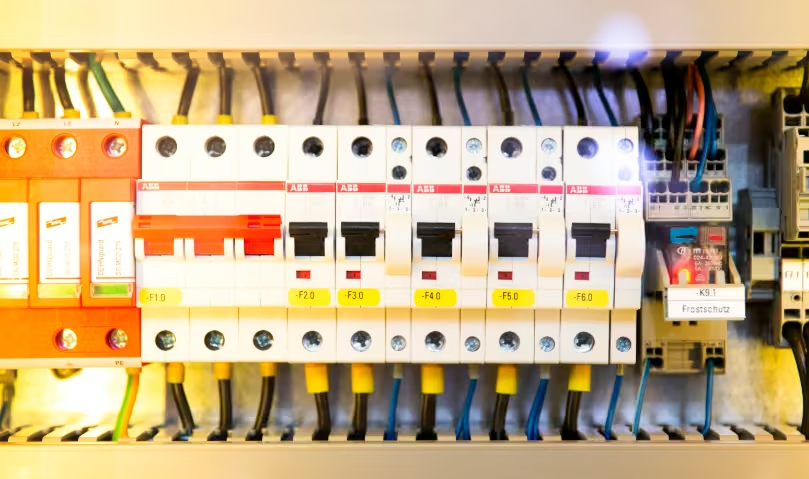
Go to the switchboard. Find the breaker that’s sitting differently from the others, visibly off or stuck in the middle. Note which room or area it serves.
Unplug every appliance and device on that circuit. Reset the breaker.
With nothing connected, reset the breaker. Stays on? The fault is almost certainly in one of the appliances, not the wiring. Start plugging things back in, one at a time, with a pause between each. When it trips, whatever you just connected is where to start looking.
Trips immediately with nothing plugged in? Different problem. The fault is inside the wiring or the breaker itself, and that’s not a reset situation anymore. That’s when you need a licensed Canberra electrician for electrical repairs.
One thing worth being clear about: repeatedly resetting a breaker that keeps tripping isn’t neutral. It puts stress on the breaker and does nothing about the underlying fault. Three resets with no resolution are enough, and after that, you need someone who can actually test the circuit.
Warning Signs That Change the Urgency
A tripping breaker that holds after the load is reduced is manageable. There are other signs that make this more urgent.
A burning smell from the switchboard or any outlet is not a watch-and-wait situation. Neither is a breaker that’s visibly discoloured, warm to the touch, or surrounded by scorch marks. Flickering lights on the affected circuit, outlets that feel warm, or buzzing sounds from the board, any of these, alongside a tripping breaker suggests the fault has been active longer than it should have.
Any combination of these: don’t reset anything. Call Watts Needed’s emergency electrical line.
When It’s Time for a Switchboard Upgrade
A circuit breaker that keeps tripping is sometimes the symptom of a switchboard that’s reached the end of its useful life, not just a single failing component.
Canberra homes from the ’70s and ’80s, across suburbs like Belconnen, Tuggeranong, and North Canberra, often have boards that weren’t designed for modern electrical loads, and that may be lacking safety switches on all circuits. If there are ceramic fuses rather than modern breakers, no RCD protection, or capacity issues across multiple circuits, a switchboard upgrade addresses the root problem rather than patching individual symptoms.
An electrician attending a fault call can assess whether that’s the case and give you a straight answer on what the board actually needs.
Why This Isn’t a DIY Fix
Resetting a breaker, fine. Unplugging appliances and testing one at a time, fine. Everything beyond that requires a licensed electrician.
The wiring inside a switchboard is live even when individual breakers are off. Testing for shorts, checking insulation resistance, tracing faults in walls, this needs both the right equipment and the legal authority to do it. Unlicensed electrical work isn’t just a regulatory issue. It creates liability that attaches to the property and can void insurance coverage.
A licensed electrician will test the circuit, find the fault, fix it, and issue a Certificate of Electrical Safety confirming the work is compliant. That’s the whole job.
The Bottom Line
One trip is the system doing its job. The same breaker tripping repeatedly is something else, a fault that’s still there, waiting.
Try the obvious first. Unplug, reset, and test each appliance one at a time. That clears most overload situations quickly. If the breaker still won’t hold, or any of the warning signs above are present, don’t keep resetting it. Contact Watts Needed and get it tested properly. Faults don’t resolve on their own. They just get more expensive.