Surge protection is a device at your switchboard that sends excess voltage to earth before it reaches your appliances. In a Canberra home, it deals with the everyday spikes: network faults, a lightning strike a few suburbs away, your own air conditioner cycling on. A direct strike on the house is beyond it. Nothing sold for homes handles that.
Anyone telling you otherwise is selling something. Direct hits are rare anyway. The surges we deal with week to week are smaller, and they come from places most people never think about.
Key takeaways
- Protection at the switchboard covers every circuit in the house.
- Inverter air conditioners first.
- Overhead lines in your street or along the back fence raise the risk.
- Check the indicator window on the unit. Red means it’s finished and needs replacing.
What is surge protection, and what does it do?
A surge protection device watches the voltage on your wiring and diverts any spike to earth within millionths of a second. Lightning surge protection in a house works the same way, handling the surge a nearby strike pushes along the lines.
Your supply sits at a nominal 230 volts. A surge can briefly reach thousands. The whole event is over in microseconds, and that’s still enough time to cook the control board in a washing machine.
Electricians call the unit an SPD. You’ll also hear surge diverter, the older name that still turns up on invoices and switchboard labels. A surge arrester is heavier equipment again, the kind Evoenergy mounts on the network itself.
For a house, the right choice is nearly always a type 2 surge protection device on the main switchboard. Type 1 units belong on buildings with an external lightning protection system under AS/NZS 1768, the rods and down-conductors you see on church spires and tall commercial buildings. Suburban Canberra houses don’t have those, so a Type 1 unit adds cost for no gain.
Where do power surges come from in Canberra?
Mostly from the network and from appliances inside the home. Summer storms add to the total.
Canberra averages around twenty thunderstorm days a year, most of them between November and February. A strike a few kilometres off can induce a power surge in the overhead lines that reaches every house on the circuit.
The rest of the year, the causes are duller. A branch comes down across the line. A car hits a pole. When supply comes back after a network fault, the reconnection can send its own spike down the street.
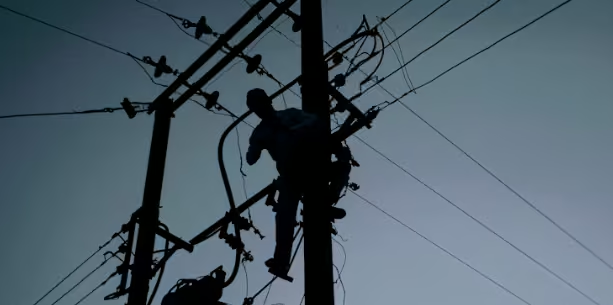
Older suburbs carry more of this exposure. Through much of the inner north and Woden, supply still runs pole to pole along the back fences, past sixty years of eucalypt growth. Roughly 100,000 ACT properties sit on overhead lines.
Plenty of surges never leave the property. Air conditioner compressors and solar inverters push small spikes back into your wiring every time they switch, and so does any motor that starts and stops. You won’t see or hear any of it. About four in ten Canberra houses now have panels on the roof, each with an inverter adding to the load, and the DC side between panels and inverter can need protection of its own.
Surge protector power board or whole house surge protector?
A power board protects whatever is plugged into it and nothing else. Everything wired into the house needs protection at the switchboard.
Boards are fine for the TV and the computer. The oven, the dishwasher, the split system, the smoke alarms and every LED downlight get nothing from them.
The cheap boards are the bigger worry. Inside each one is a component, usually a metal oxide varistor, that takes a little damage with every surge. Eventually it’s spent. Most cheap boards give no sign of that at all, so the TV keeps running off what has quietly become an ordinary power board. Some of the no-name boards sold online are a fire risk on top of that.
If you’re buying a surge protector for the lounge room, pick a known brand with an indicator light and replace it every few years.
Our preference is one surge protection device at the switchboard over a drawer full of boards. The best setup is layered. A whole-house surge protector takes the bulk of any spike, and one decent board in front of the TV cabinet catches what’s left. A proper switchboard unit also shows you its condition: a small window sits green while the SPD has life in it and turns red once it has taken a hit big enough to need replacing.
Is surge protection worth it for a Canberra home?
For a house with modern appliances, yes. One fried appliance usually costs more than the device.
Appliances changed. A fridge from the early 1990s was a compressor and a thermostat. Its replacement has a control board, sometimes two, and so do the washing machine and the dishwasher. Those boards are where power surge damage turns up first.
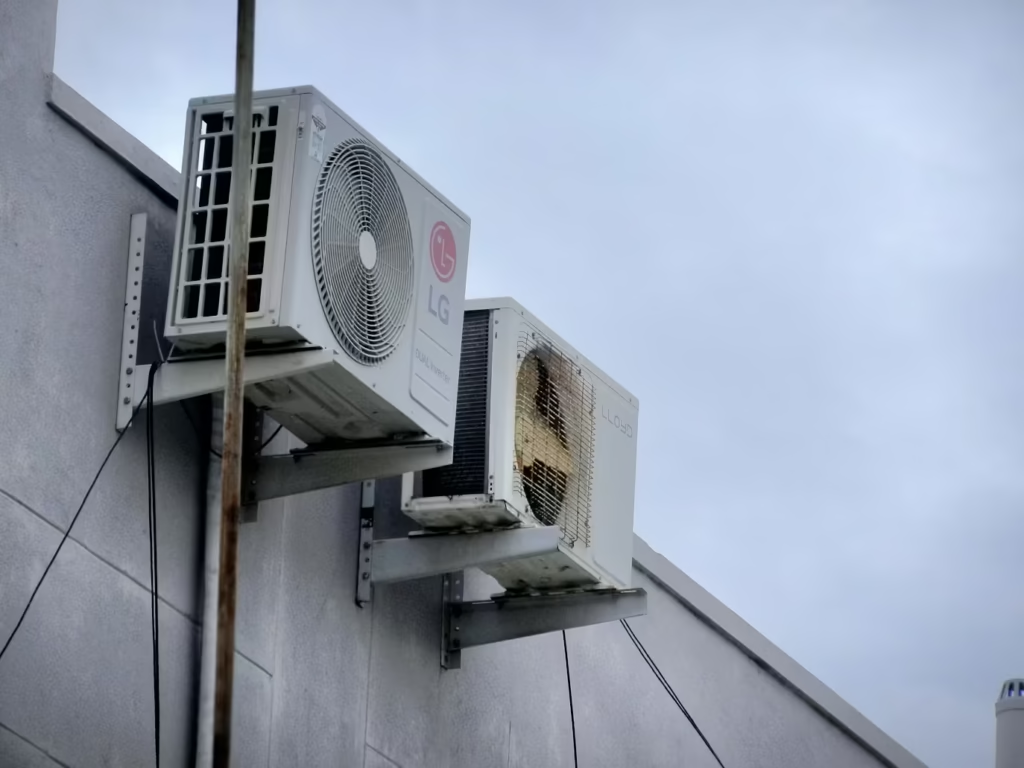
The inverter air conditioner is the one we’d protect first. Several boards, and an outdoor unit on the same exposed supply as everything else. Manufacturer warranties typically exclude surge damage, so a storm-killed board becomes your bill. Installers who fit surge protection to every air conditioner they put in report noticeably fewer warranty call-backs, and they aren’t doing it out of kindness.
Then look outside. Overhead lines in the street or across the back fence mean more exposure. Underground supply lowers it, though not to zero when overhead lines run a few hundred metres away, because those lines still feed your part of the network. Googong, where we’re based, runs underground. Calwell and Florey have both kinds, sometimes a street apart.
Think of it as insurance. You may never know whether it did anything, which is what working looks like for a surge protector. Nobody needs one until the day they do.
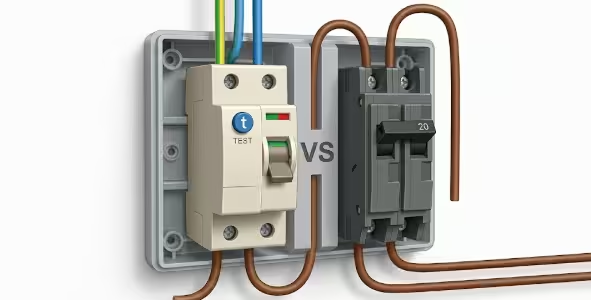
RCD vs surge protector: what’s the difference?
A surge protector is not a safety switch, and neither replaces a circuit breaker.
People mix them up all the time. A safety switch, or RCD, watches for current leaking out of a circuit, through a person, for example, and cuts power in a fraction of a second. That’s the device keeping someone alive after they touch a faulty appliance. A surge protector cuts nothing. It sits idle until the voltage jumps, shunts the excess to earth, then goes back to waiting. Circuit breakers handle overloads and short circuits, a separate job again.
Under AS/NZS 3000, new circuits in a home need RCD protection. Surge protection gets a mention in the same standard, in Appendix F, but only as guidance on how to install it. Optional, in other words, which is why most builders leave it out. That reflects the build budget and says nothing about the device.
What does surge protection installation involve?
On a modern board with a free slot, the job is short. Older boards may need work first.
The unit clips onto the DIN rail beside your breakers, connects to the supply and to earth, and gets its own breaker so it can be isolated when the time comes to replace it. That’s fixed wiring, which makes it licensed work in the ACT.
If your board still has ceramic fuses, or every slot is taken, expect to hear that it needs upgrading first. A good surge protection device on a tired board protects the appliances, while the board itself stays the weak point.
Board space drives most of the whole house surge protection cost. Three-phase supply adds to it, and so does solar if the DC side needs its own device. Timing matters most. If we’re already at the board for an upgrade or an EV charger, the extra labour is small.
Talk to a Canberra electrician about your board
Nathan and the team are based in Googong and work across Canberra and surrounds. We’ll look at your switchboard, tell you whether the device fits as the board stands or needs the board sorted first, and quote upfront before any work starts. Call 0440 138 246 or get in touch online.
Frequently Asked Questions
Do I still need one if my power is underground?
You need it less than a house on overhead lines. The spikes from your own air conditioner and inverter arrive either way, so for a home full of electronics, yes.
Will it protect against lightning?
Against a nearby strike, yes. The strike induces a surge in the lines, and a Type 2 unit handles it. A direct hit on the house is beyond any domestic device.
How long does a surge diverter last?
There’s no fixed life. Check the indicator window whenever you test your safety switches, and replace the unit once it shows red.
Is a power board enough on its own?
For the TV and computer, it’ll do.
Can I install a whole house surge protector myself?
No. The unit connects inside your switchboard, which makes it licensed electrical work under ACT law. A DIY job also gives your insurer an easy reason to knock back a claim if anything goes wrong later, and that’s before the safety side of working inside a live board.