Both will cool a Canberra house. Evaporative suits our dry summer air and shifts a lot of it for very little power. Reverse cycle cools with the windows shut, filters what it circulates, and carries the house through July. For most Canberra homeowners replacing something at end of life, the evaporative air conditioning vs reverse cycle decision is settled by winter, not summer.
Key takeaways
- Evaporative cooling genuinely works in Canberra. The “evap is useless” line comes from humid coastal cities and doesn’t transfer here.
- The local dealbreaker isn’t humidity, it’s smoke. Evap pulls outside air through the house, so hazard reduction burns and bushfire days take it out of service.
- Reverse cycle handles both halves of the year. One system, one set of ducts, one service call.
- The running cost gap between the two has narrowed as solar has spread across ACT rooftops.
- Apartments and most townhouses can’t run evaporative at all, which makes the comparison academic for a large slice of Canberra housing.
Does evaporative cooling actually work in Canberra?
Yes, and this is worth saying plainly because so much online advice says otherwise.
That advice is imported. It comes from Brisbane and the Sydney basin, where afternoon humidity sits high and an evaporative unit just makes the place feel like a warm towel. Canberra’s climate doesn’t behave that way. On a proper January scorcher, the relative humidity here often drops into the twenties, sometimes lower, and dry air is exactly what an evaporative cooler needs. A well-maintained unit will take somewhere around ten to twelve degrees off the outside temperature under those conditions.
Where it starts to lose is at the top of the range. Does evaporative cooling work in high temperatures? Sort of. On a 40-degree day, it will get the house to something survivable, but survivable and comfortable stop being the same word somewhere above 38, and that’s before you account for pad condition. A unit that hasn’t been serviced in four summers is not achieving anything close to its rated drop. Half the “my evap is rubbish” complaints we’re called out to are really a maintenance problem wearing a performance costume.
The smoke problem nobody puts at the top of the page
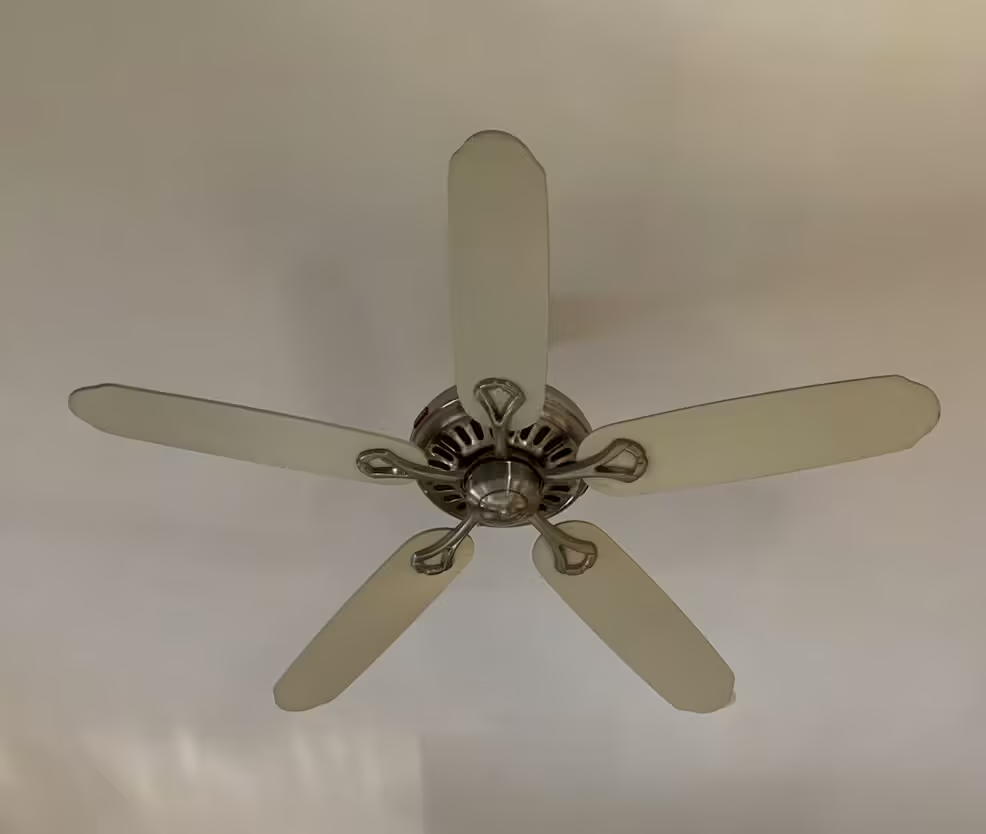
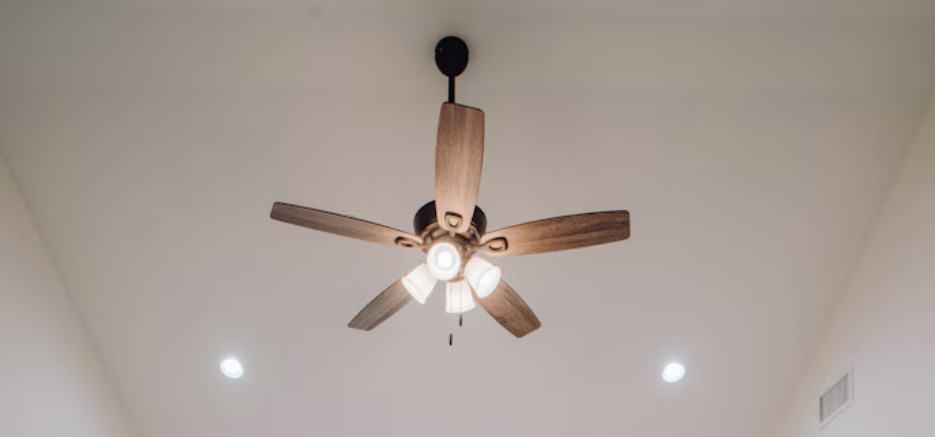
Evaporative cooling works by dragging outside air in, cooling it across wet pads, and pushing it through the house. Whatever is in the outside air comes with it.
Anyone who was in Canberra through the 2019/20 summer already knows where this goes. For weeks the sensible advice was to seal the house, and an evaporative system does the precise opposite of sealing the house. Hazard reduction burns do a smaller version of the same thing several times a year, usually in autumn and early spring, occasionally on a warm day when you’d want cooling running. On those days you switch the evap off and open nothing.
Reverse cycle recirculates air behind closed windows and doors. Filters on the return can be upgraded, the system isn’t dependent on outside air at all, and the house stays shut. In the evaporative cooling vs reverse cycle comparison, this is the strongest Canberra-specific argument there is, and almost no competing article leads with it.
What does your evaporative system do in July?
Nothing. That’s the point most comparisons skip past.
Cooling is one half of the decision here. Canberra’s winter is the other half, and it’s the longer half. A house with evaporative cooling almost always has a second system doing the heating, usually ducted gas, and in a lot of older suburbs that gas furnace is the same vintage as the evap sitting above it. Two systems, two sets of maintenance, two things that fail on the worst possible day.
The regulatory picture pushes in the same direction. New gas connections have been prohibited across most of the ACT since December 2023 under the Territory’s gas transition legislation, and Evoenergy’s gas network is slated for decommissioning by 2045. Roughly a third of Canberra households were already fully electric when that ban came in, and the number has climbed since. If your furnace is near the end and your evap is near the end, replacing both with a single ducted reverse cycle system isn’t a cooling upgrade. It’s a heating decision that happens to solve summer as a side effect.
That’s usually the conversation we end up having on site. People ring about cooling in February and leave with a plan about winter.
Is evaporative cooling cheaper to run than reverse cycle?
Yes, but the gap is smaller than the old rule of thumb suggests.
An evaporative cooler runs a fan and a water pump. A reverse cycle system runs a compressor. On raw consumption, there’s no contest, and if you’re comparing running costs evaporative vs reverse cycle on a still-air spreadsheet, evap wins comfortably.
The spreadsheet assumes flat-rate grid power and no panels on the roof. Neither holds for a lot of Canberra now. Something in the order of four in ten ACT homes have rooftop solar, and cooling load peaks in the middle of the day when those panels are producing hardest. A reverse cycle system running on generation you’re otherwise exporting for very little is a different proposition to one running on imported power at 5pm. Add the water consumption that evaporative cooling quietly carries and the honest position is: still cheaper, typically, but not by the margin people quote at barbecues. Modern inverter systems from the likes of Daikin, Mitsubishi Electric and Fujitsu have closed a lot of that ground on efficiency alone.
How many windows do you have to leave open for evaporative cooling?
More than most people expect, and this is the trade-off that gets glossed over in every evaporative cooling pros and cons list.
An evaporative system is a one-way street. Air comes in through the roof unit, and it has to get out somewhere, or the whole thing stalls against its own pressure. The practical rule is a relief path in every room you actually want cooled: roughly a hand’s width of open window or door each, and more in whichever room you’re sitting in. Close the house up and the airflow dies, the cooling with it.
So the real cost isn’t the power bill. It’s a house that can’t be secured properly while it’s cooling, street noise coming straight in, and pollen circulating freely in a city with a genuinely miserable hay fever season. Then there’s the smoke day, when you need the house shut, and the system needs it open.
House, townhouse or apartment?
For a freestanding home on a decent block, both options are on the table, and the comparison above is the real one.
For an apartment, it isn’t a comparison at all. Evaporative cooling needs a roof-mounted unit, a duct run through the ceiling space, and a relief path out of the dwelling. Apartments have none of those things reliably, and single-aspect units have nowhere for the air to go even in principle. What’s available is a split system or, in larger dwellings, a small ducted reverse cycle unit, and the constraints move to where the outdoor condenser sits, what the owners corporation permits on the facade or balcony, and how much noise it makes at the neighbour’s bedroom window.
Townhouses sit in between. Some of the newer Gungahlin and Molonglo stock has the roof space and the block orientation to take evaporative. Plenty of the older courtyard developments through Woden and Belconnen don’t, and even where the roof works, shared walls and tight setbacks make the relief-path problem worse than it looks on the plan.
Worth checking your body corporate rules before you get quotes on either. It saves a conversation.
What the changeover actually involves
This is where the sales pitch and the site inspection part company.
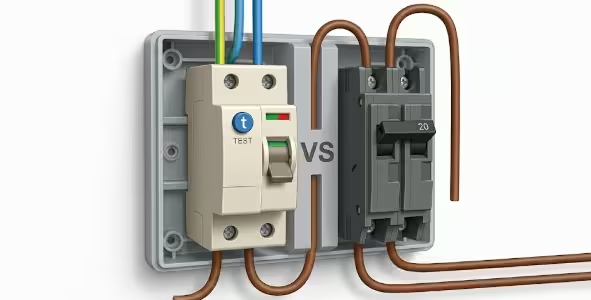
A ducted reverse cycle system is a substantially larger electrical load than the fan and pump it’s replacing. In practice, that means a dedicated circuit back to the switchboard, an isolator at the outdoor unit, and a genuine look at whether the board and the consumer mains can carry the addition at all. On a bigger home with a large ducted unit, it can be the thing that finally pushes a single phase supply far enough that three phase power becomes the sensible answer rather than an upsell.
A lot of Canberra boards, particularly in the ex-govvie stock through Ainslie, Curtin and Pearce, are already full. Some are still running rewireable fuses. Adding a compressor circuit to a board with no spare ways and undersized mains is not a five-minute job, and anyone quoting it as one hasn’t looked in the box.
None of that is a reason to avoid the changeover, only a reason to have the switchboard and mains assessed before you commit to a system size, because what the board can carry changes which unit is realistic and what the install costs to complete properly.
[Nathan to add: one real Canberra job here. Ideally a changeover where the board or mains turned out to be the constraint, and what got done about it. Two or three sentences, no address details.]
“My evap is 20 years old and still fine”
Fair, and it might well be. Evaporative units are simple, and simple things last until they rust out.
But age isn’t capability. A twenty-year-old unit drinks water, runs one or two fan speeds, has no zoning, and cools the whole house whether or not anyone is in the back half of it. Bearings get noisy. Pads glaze up and stop wetting evenly. It’s still working in the sense that it turns on, which is not quite the same as working.
The question isn’t whether it runs. It’s what you’d replace it with the day it doesn’t, and whether you want to be making that decision in the middle of a February heatwave with a gas furnace of similar vintage waiting to fail in July.
If you’re weighing up a changeover and want to know what your switchboard will actually support, talk to a licensed Canberra electrician and we’ll assess the board, the mains and the load before you pick a system.