Your house needs rewiring when the insulation on its cables has broken down. The year it was built only hints at that. Canberra homes that qualify usually have rubber (VIR) or cloth-covered wiring from before the 1960s, insulation that fails testing, or a previous owner’s DIY. A 1970s or 1980s home with PVC wiring more often needs a switchboard upgrade with safety switches.
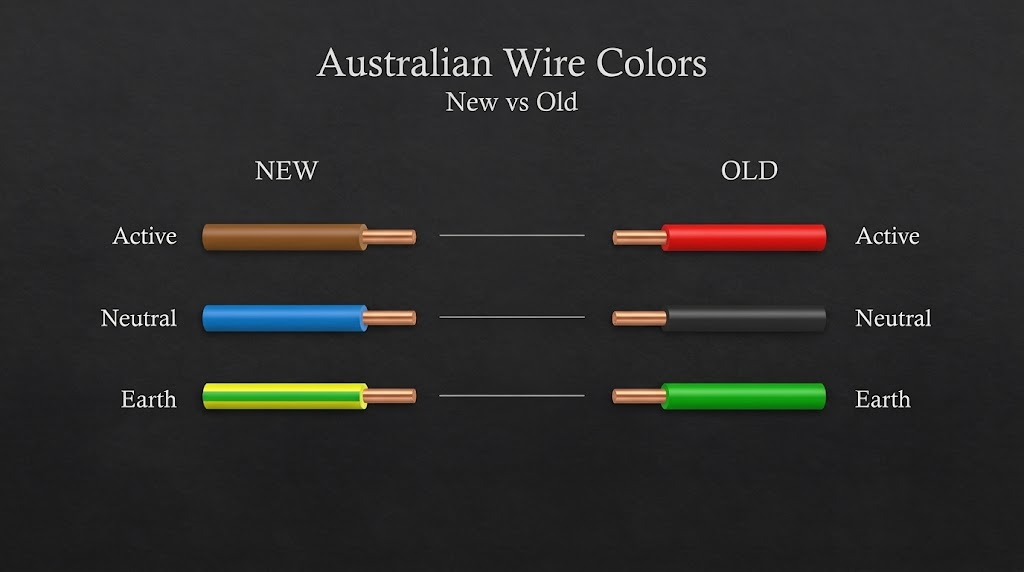
Copper doesn’t wear out in any practical sense. The coating around it does. Rubber goes brittle after decades of roof-space heat and air, and the cotton braiding wrapped over it was never much of a barrier to begin with. PVC behaves differently. Cable installed in the 1970s regularly passes testing today, and one rule of thumb taught to apprentices gives it 70 years or more.
So when someone asks us, “Does my house need rewiring?”, we ask what’s in the roof before we ask when the house was built.
When does a house need rewiring?
Rubber (VIR) and cloth-covered cable are the main reasons for house rewiring in Canberra. Wiring from the PVC era rarely needs replacing unless something has damaged it.
What you’re likely to find | Roughly when it went in | What it usually means |
VIR: single rubber-insulated cables, often cotton-braided, in timber moulding or metal conduit | Canberra’s first homes in the 1920s to the late 1950s | Plan for a full rewire. Perished insulation can leave live conductors exposed, a shock and fire risk. |
TRS (tough rubber sheathed) cable | 1940s to the 1960s | Same verdict as VIR. |
Early PVC (TPS) cable | 1960s to 1970s | Usually sound. Test it and check the earthing. |
PVC TPS with a full earth | 1980s onwards | Rarely the problem. Check safety switch coverage instead. |
People asking whether a 1960s house needs rewiring get mixed answers for a fair reason. The decade straddles the changeover from rubber to plastic, and plenty of early-sixties ex-government houses in Canberra were wired with some of each. A post-war cottage in Ainslie or Griffith with a 1980s rear addition can have good cable at the back and VIR in the front rooms.
A house built in 1991 is decades too modern to have rubber wiring.
What are the signs your house needs rewiring?
A burning smell, tingles, power points that run hot and buzzing from switches all mean heat or current is going somewhere it shouldn’t, which is how an electrical fire starts. Flickering lights and a breaker that keeps tripping more often trace back to one circuit or one appliance.
Call a licensed electrician the same day if you notice any of these:
- A burning or hot-plastic smell with no obvious source.
- Tingling, or a mild electric shock, from a tap, appliance or switch plate.
- Power points warm to the touch. Scorch marks or discoloured power points count as well.
- Buzzing from a switch, light fitting or the switchboard.
None of them proves the house needs rewiring. A loose termination behind one power point produces the same burning smell as perished cable in the ceiling, and the fix might be one point. Finding out which takes proper electrical fault-finding.
Tripping is the sign that sends most people searching. A circuit breaker that keeps tripping gets blamed on old wiring constantly, and old wiring is usually the least likely culprit. Overloaded circuits are far more common, and Canberra winters make them worse: a column heater and a kettle sharing the kitchen power circuit on a frosty morning will do it. So will a single appliance leaking current to earth, which trips the safety switch (RCD). Unplug everything on the affected circuit, reset it, and plug things back in one at a time. When the trip comes back as the old bar fridge goes in, you’ve found your fault. In a house full of power boards, repeated trips point to overloaded circuits, and too few of them.
Flickering lights, likewise. Most often a lamp, a dimmer or a loose connection.
Water is the warning sign we take most seriously. The January 2020 hailstorm holed thousands of Canberra roofs, and rain that gets through a damaged roof runs down wall cavities and into ceiling light points. Wiring that has been wet needs testing by a licensed electrician before it’s trusted again. Corroded terminations can start tripping months after the roof is fixed.
Rewire, switchboard upgrade or repair: which does your house need?
For many older Canberra homes, the first job is the switchboard: circuit breakers and safety switches in place of ceramic fuses.
From the smallest job to the largest:
- Repair. One hot power point, a perished cable end at a light fitting, a run in the roof that rats have chewed. Rodents in the ceiling are reason enough to book a test.
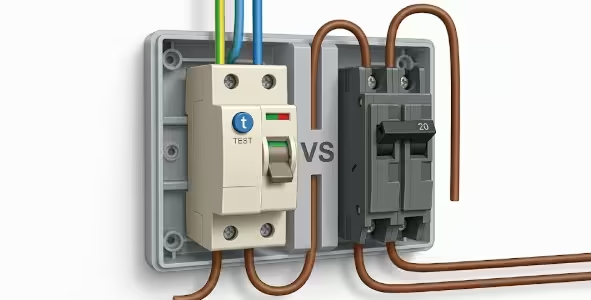
- Switchboard upgrade. This is what we recommend to most owners of 1960s to 1980s homes worried about their wiring. A switchboard upgrade puts an RCD on every circuit, the same protection AS/NZS 3000 requires in new homes. Those switches cut the power when they sense around 30 milliamps leaking to earth, fast enough to stop a shock from killing someone. The cable in the walls stays.
- Partial rewire. Replace the circuits that are failing, or the ones where old cable joins new. Wet areas come first, starting with the kitchen. Home rewiring done room by room over several years is a legitimate plan, provided each stage is tested.
- New circuits. Plenty of Canberra households are swapping gas heating and cooktops for heat pumps and induction ahead of the ACT’s move off gas. Those loads need dedicated circuits from the board, and sometimes an application to Evoenergy for a bigger supply. New loads stay off the old circuits, which would otherwise end up as overloaded circuits.
- Full rewire. Rubber or cloth insulation throughout, widespread failures on testing, or several generations of unlicensed work under the floor. Bad DIY can start an electrical fire in a house of any age. When nobody knows what’s down there, ripping it all out is sometimes the cheaper certainty. The cost to rewire a house depends heavily on how hard the cable is to reach.
ACT law doesn’t require an existing home to be rewired to the current wiring rules. Wiring installed under an earlier edition of AS/NZS 3000 can stay in service, while any new or altered work must meet the current standard. Landlords carry a broader duty under the Residential Tenancies Act 1997 to keep a rental’s electrical installation safe.
Ceramic fuses are legal to keep in an owner-occupied home. A fuse protects the cable from overload, and a safety switch protects the person, which is why we’d replace them.
What should an electrical inspection test?
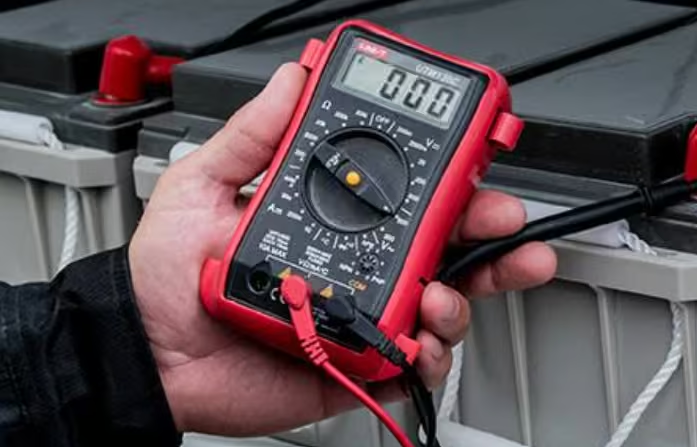
A proper electrical inspection measures the electrical wiring with test instruments and puts the results in writing. Looking at the cable can’t tell you whether insulation is failing inside a wall.
The test that settles most rewiring decisions is insulation resistance. With a circuit isolated, the electrician applies a test voltage between the conductors and to earth, then reads how much leaks through the insulation. Perished rubber shows up as a low reading long before it looks bad. The other periodic verification tests in AS/NZS 3019 sit alongside it: earth continuity, polarity, earth fault loop impedance and an RCD trip-time test.
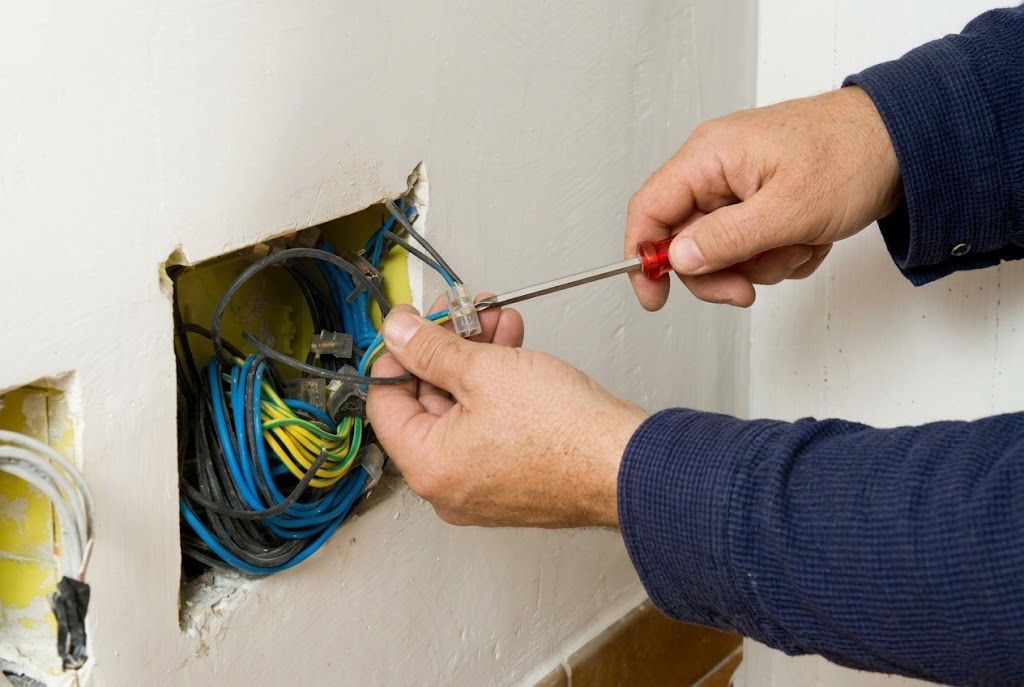
With the faceplates off, browned insulation at the terminals, or cable someone extended with tape inside the wall box, it says more about a house than the age of the board.
A homeowner who has had three electricians through, and heard “full rewire” from each after the building inspector said nothing, has every reason to be wary. Ask each licensed electrician what they tested and what the readings were. A recommendation made from the hatch of the roof space is an opinion you’re paying to hear. Quotes for house rewiring on one property can differ by more than double, usually because the electricians priced different jobs. Get them against one written scope.
File the results and the circuit schedule with your house documents.
Why does renovating an older home so often lead to rewiring?
Rubber-insulated wiring can keep working for decades if nobody touches it and fail as soon as someone does. Have the old wiring assessed before renovation plans are locked in, so rewiring your home happens while the walls are open.
Owners of older homes often tell us the wiring has been fine for 60 years. Plenty of the time, they’re right. Cable that looks intact at the power point can shed its insulation in flakes once it’s pulled through a hole, and a knee on a run in the roof can crack it open where nobody will see.
Small jobs in an old house carry this risk most. A booking for six downlights or a new oven circuit means moving old cable, and if it’s rubber, the job can stop there. New work can’t be joined to cable that falls apart in the electrician’s hands. Knocking through for open-plan living, or adding a second storey to a 1960s ex-government house, exposes the original wiring on a much bigger scale.
Timing is the part you control. Get the wiring assessed while the renovation is still on paper, and run new cable once walls and ceilings are open, ahead of the plasterer. Owners often do it the other way round, painting first and hearing about rewiring afterwards, so the plastering gets paid for twice. On a kitchen or bathroom renovation, the electrical rough-in belongs early in the schedule for the same reason.
Can you rewire a house without removing walls?
Often, yes. In an older Canberra house with a suspended timber floor, or any brick-veneer home, new cable runs through the roof space and under the floor, with small cut-ins at each power point and switch.
Ex-government houses from the 1950s and 60s, in suburbs like O’Connor, Turner and Narrabundah, tend to be the friendliest to rewire, with a subfloor crawl space below and a pitched roof above. Brick veneer, the default across Woden, Weston Creek and Belconnen, has a timber frame behind the brick, and cable can be fished down between the studs. Double brick in some pre-war houses means chasing a channel into the wall for every run. Many 1980s Tuggeranong homes sit on a slab, which only gives the electrician the ceiling to work from.
Making good is where house rewiring budgets most often go wrong, because most electrical quotes stop at the hole. The plasterer and painter are usually a separate bill. In an older house with original cornices or a textured ceiling, matching the finish can take longer than the electrical work did. Before you sign, ask who is patching, and whether it’s in the price.
How long does it take to rewire a house?
Full rewiring of a typical three-bedroom Canberra home takes most of a working week. You can usually stay living there, because home rewiring is staged a few circuits at a time and the house has lights and a working fridge most nights. The board changeover is the one point where everything goes off, generally for part of a day.
Buying an older home in Canberra: what to check before you make an offer
The building and pest reports that come with an ACT contract say very little about wiring. Look at the switchboard and into the roof at the open home, then book a pre-purchase electrical inspection before you’re committed.
At the viewing:
- Switchboard. Ceramic fuses mean the board is original or close to it. Safety switches have a test button marked T. Check whether the circuits are labelled.
- Roof space, from the hatch. Black rubber-covered cable or cloth braid running along the timbers is VIR. Look without touching it.
- Two-pin power points or old round switches anywhere in the house.
- Power boards and extension leads in every room, which tells you outlets aren’t where people need them. That’s a lifestyle cost, fixed with new circuits.
Read the asbestos paperwork in the contract as well. Meter boards in older homes were often mounted on asbestos-containing panels, and that changes how a switchboard upgrade is done. Check the alarms against the ACT smoke alarm rules while you’re there. If the wiring is coming out anyway, hardwired interconnected alarms go in with it.
Book the inspection before you exchange, or inside the cooling-off period, and ask for insulation resistance readings. A written finding of “VIR throughout” gives you something specific to negotiate with. A house that needs rewiring can still be a good buy when you know the scope going in.
Talking to Watts Needed about house rewiring
Nathan has spent 20 years working on Canberra homes, and our team has completed more than 7,500 projects across the region, from Tuggeranong to Gungahlin. We’re a local family business based in Googong.
For house rewiring in Canberra, we test before we recommend anything, give you the readings in writing and quote upfront, so you know the scope before any wall is opened.
Our licensed electricians will test it and tell you plainly whether your house needs rewiring or whether a switchboard upgrade covers it. Book an electrical inspection or call 0440 138 246.
Talk to Watts Needed about house rewiring
Not sure what’s in your walls? For house rewiring in Canberra, our licensed electricians test before recommending anything and give you the readings in writing. You’ll know plainly whether your house needs rewiring or whether a switchboard upgrade covers it. Quotes are upfront, so you know the scope before any wall is opened. Book an electrical inspection or call 0440 138 246.