No power at your place? Start here
Power out in Canberra? Check Evoenergy’s outage map before anything else. A blank result for your street means the fault sits in your own switchboard, and that’s usually where an emergency electrician’s call out earns its keep. A listed outage means the network’s already working on it, and no electrician gets your lights back on faster than the crew already assigned to it.
Most Canberra homes lose power for one of two reasons: an Evoenergy network fault, or a switch that’s tripped on their own board. From your lounge room, the two look identical. They’re solved in completely different ways.
Key takeaways
- Evoenergy’s outage map settles most no-power questions in under a minute. Check it first.
- A safety switch or breaker that resets and holds doesn’t need an electrician. One that trips again straight away does.
- Burning smells, sparking, exposed wiring, or a safety switch that won’t stay reset are genuine electrical safety concerns, not just inconveniences, whatever time it is.
- After-hours and 24-hour call-outs cost more than a scheduled visit. That premium buys availability at 2 am, not urgency you’ve invented yourself.
- Have your address, the switch involved, and what was running at the time ready before you call.
Is it a network outage or a fault inside your home?
Before you touch the switchboard, check whether the outage is bigger than your house. Evoenergy runs Canberra’s poles and wires, and their outage map shows live faults by suburb, along with an estimated restoration time. If your street’s listed, the fault sits with the network, not your wiring, and calling an electrician won’t speed anything up.
This is the check that saves people an unnecessary electrician call-out fee. Four out of five competitor guides skip this step entirely and send readers straight to the switchboard, which means a chunk of their traffic ends up paying a callout fee for a fault that was never inside the house. That’s not good advice; it’s a shortcut that costs the reader money. For most Canberra households, this single check already answers when to call an emergency electrician: if the network’s down, you don’t need one yet.
If your neighbours still have power and only your place is dark, the fault is internal. That’s when the switchboard becomes the next stop, not before it. Plenty of people searching for an emergency power outage electrician at this point just need the outage map, not a call out. At this stage you’re really deciding between needing an emergency electrician for no power and simply waiting on Evoenergy to restore the network.
Which switch has tripped: safety switch, circuit breaker or main switch?
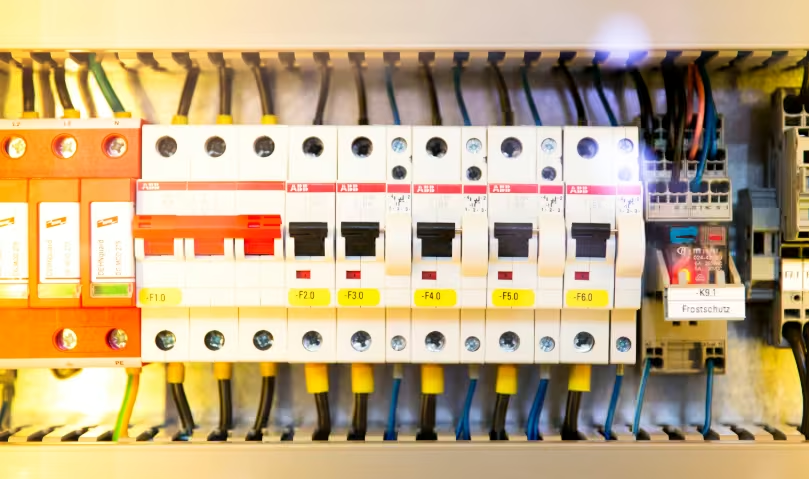
Open the switchboard and find whichever switch sits in the off or middle position. A safety switch, or RCD, works by comparing the current going out on a circuit against the current coming back. A mismatch usually means current is leaking somewhere it shouldn’t, most often through a person touching a live fault, though a failing appliance or damp getting into an old point can trip it just as easily. A circuit breaker works on load instead of leakage. It trips because whatever’s on that circuit, often a double adaptor carrying more than it should, draws more current than the circuit’s rated for. The main switch is the one actually worth worrying about, and everything else on the board is a distraction until you’ve ruled that one out. When that’s the one that’s dropped, the fault usually sits upstream of any single circuit. Safety switches have been mandatory on power and lighting circuits in the ACT under AS/NZS 3000 for years now, which is part of why modern boards trip more often than the old fuse-based ones ever did. If yours still looks like the latter, that’s one of the clearer switchboard upgrade signs worth acting on before storm season. An ageing board isn’t a cost saving, it’s a bet on your own house, and switchboard and power upgrades are usually the straightforward fix.
A safety switch and a circuit breaker fail for different reasons, and mixing them up is how a five-minute check turns into a call out that wasn’t needed. Identifying which switch tripped tells you what’s safe to reset. It doesn’t tell you whether the fault needs a call out. That comes down to what happens after you flip it back on.
A single circuit breaker with an obvious cause, like a heater and a kettle sharing one double adaptor, is usually fine to reset once and keep an eye on. A safety switch that’s tripped with no clear reason behind it calls for more caution before you touch it again.
Why do my mains keep tripping?
When a circuit breaker keeps tripping even after a clean reset, the fault is sitting somewhere on that circuit, not in an overloaded moment that’s already passed. Turn off every device connected to it, reset the switch, then bring each one back on individually. The device or point that trips it again is where the fault sits.
If it trips before you’ve turned anything back on, or trips again within seconds each time, stop testing. That pattern usually means the fault sits in the wiring itself, not in what’s plugged in, and it calls for an emergency electrician for tripping power, not more resetting. This is also where an emergency electrician for tripping power gets called out for nothing: a single reset that holds doesn’t need one.
This isolate-by-elimination approach is safe because you’re only operating switches, not opening anything or working on wiring yourself. Anything beyond flicking switches, like opening the board or touching wiring, is notifiable electrical work under the ACT’s Utilities Act 2000 and needs to go to a licensed electrician, not a weekend fix, whatever a forum thread tells you. It still doesn’t fully answer when to call an emergency electrician, since a fault that resets cleanly once can return later. Whether a tripping breaker needs an electrician comes down to the pattern, not the single event. One appliance causing it every time is a fault you can point to. No clear cause, or a fault that keeps returning at random, is one you can’t, and that difference is what actually matters.
When should you call an emergency electrician?
Four situations justify a call regardless of the hour. Two others don’t.
Call now:
- Burning smell, smoke, or visible sparking anywhere near the board or a power point, the clearest warning signs of an electrical fire.
- A safety switch that won’t stay reset after one try.
- Exposed or damaged wiring, indoors or out.
- Power out to medical equipment, once you’ve confirmed it’s a home fault, not the network.
No need to call yet:
- A circuit breaker that trips once, has a clear cause, and resets fine.
- A confirmed network outage on Evoenergy’s map.
When to call an emergency electrician genuinely comes down to safety and pattern, not the hour on the clock. A 24-hour emergency electrician exists for the situations above, and an after-hours emergency electrician call-out is worth paying for when the fault is active and getting worse, not when it’s simply inconvenient timing.
Where some competitors overreach is calling almost anything an emergency to drive call outs, and that’s a sales tactic, not a safety standard. A switch that trips once and resets cleanly isn’t one. A switch that won’t reset, or smells like something’s burning, is. If you’re still weighing up a power outage call electrician decision against a switchboard fault, the network check from earlier settles it either way.
What an emergency electrician call out costs in Canberra
Costs vary by electrician, time of day, and how the job’s scoped, so treat this as a general range rather than a quote. Most Canberra electricians charge a standard electrician call-out fee for a scheduled job, with a higher after-hours emergency electrician rate for nights, weekends, and public holidays. How much an emergency electrician costs depends mostly on whether it’s a straightforward reset and diagnosis, or a genuine repair once they’re on site.
An emergency electrician Canberra call-out after hours will typically cost more than the same job booked for a weekday morning. That gap covers the electrician actually being available at 2 am, not just the work itself. It’s a fair trade for a genuine emergency. Paying an after-hours premium for a network outage isn’t bad luck, though; it’s an avoidable mistake, and one a quick power outage call electrician search, or better, the outage map itself, would have caught first.
Always confirm the call out fee and hourly rate when you book, before the electrician arrives.
What to have ready when you call
Whether you’ve landed on needing an emergency electrician for no power, a tripping breaker, or a safety switch fault, having a few details ready gets someone on site faster: your address and best contact number, which switch has tripped or whether it’s the whole board, what was running right before it happened, and whether Evoenergy’s map shows anything for your area.
Watts Needed runs a genuine 24-hour emergency electrician service across Canberra, and dispatch is quicker when the electrician already knows what they’re walking into, whether that’s an emergency electrician Canberra households call after a storm or a single tripped circuit that won’t reset.
Still not sure whether it’s a network fault or something on your board?
If the fault’s inside your home and something still doesn’t feel right, whatever the hour, it’s worth sorting properly rather than leaving it to guesswork. Contact Watts Needed to arrange a licensed electrician, emergency or scheduled, anywhere across Canberra.
FAQs
When should I call an emergency electrician for no power in Canberra?
Check Evoenergy’s outage map first. If your street isn’t listed and your neighbours still have power, the fault sits inside your home. That’s the point to act, since an internal fault won’t clear on its own overnight.
How do I know when to call an emergency electrician instead of just resetting the switch again?
If a reset holds, you’re fine. If it trips again immediately, or there’s any smell of burning, stop resetting and call someone straight away. Repeated tripping points to a real fault; one clean reset usually doesn’t.
How much does an emergency electrician cost after hours in Canberra?
Expect a higher rate than a scheduled weekday job. An after-hours emergency electrician charges more to cover being available overnight, on top of the standard job cost.
What's the electrician call out fee if it's a safety switch fault?
It varies by electrician, but a call out for an emergency electrician safety switch fault is usually priced as an after-hours emergency rate rather than a standard call out. Confirm the fee when you book.
Is a tripped circuit breaker always an emergency?
No. When to call an electrician for a tripping breaker comes down to pattern: one clear cause that resets fine isn’t urgent. Repeated tripping with no obvious cause is.
Do I need a 24-hour emergency electrician for a power outage?
Only if it’s confirmed as a fault inside your home. An emergency power outage electrician isn’t needed for a network fault at all, emergency or otherwise, just patience and Evoenergy’s restoration estimate.