A split system not turning on has usually lost power or signal, so start with the circuit breaker, the isolator and the remote. A split system not cooling is more often on the wrong mode or has a dirty filter. Once those check out, suspect a refrigerant leak, which needs a licensed technician.
Canberra adds a seasonal twist. Many reverse cycle units here spend winter on Heat, so the first hot day of the year is when a remote still set to Heat, or a filter holding months of dust, tends to show up.
With a split system not working, find what the unit is doing and start there.
What the unit is doing | Check first | Usually points to |
Completely dead, no lights | Circuit breaker, then isolator switch | Tripped circuit, failed capacitor or control fault |
Indoor unit runs, outdoor unit silent | Mode and set temperature, then wait a few minutes | Restart delay, capacitor, outdoor fan or compressor |
Blowing air but not cooling | Cool mode, then the filter | Blocked airflow or a refrigerant leak |
Blowing hot air | Whether it’s on Heat or Auto | A winter setting, or a fault if it’s on Cool |
Split system keeps turning off | Timer, filter, drain | Drain cut-out, overheating or an electrical fault |
Flashing lights | Write down the pattern | A stored fault code |
Why is my split system not turning on?
No power or no signal from the remote: that’s usually why a split system won’t turn on. Go through these troubleshooting checks in this order before you book a callout.
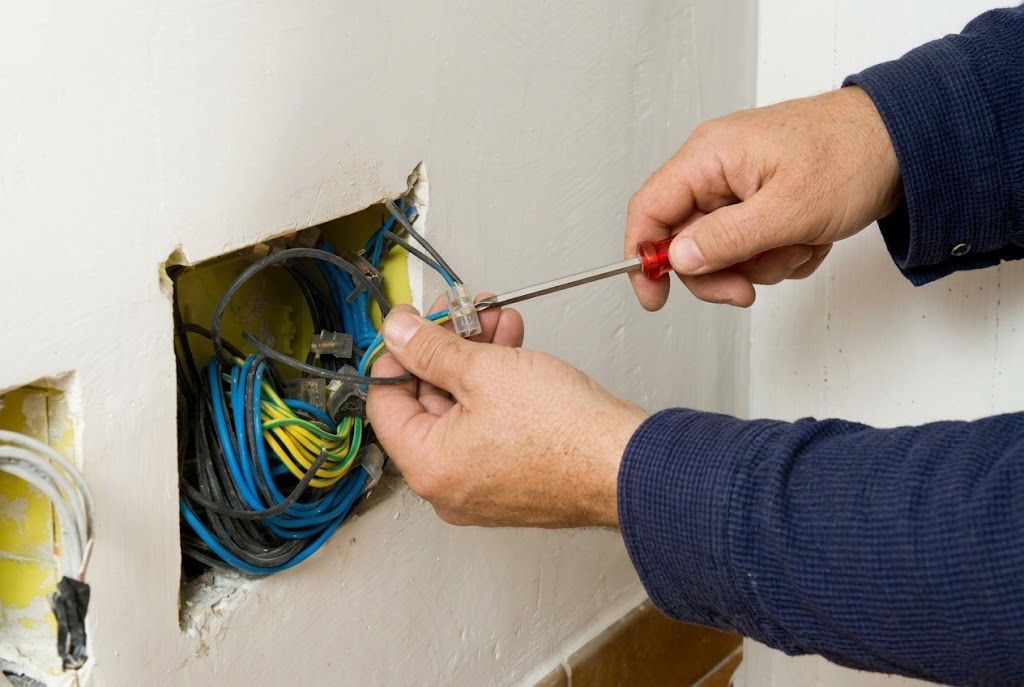
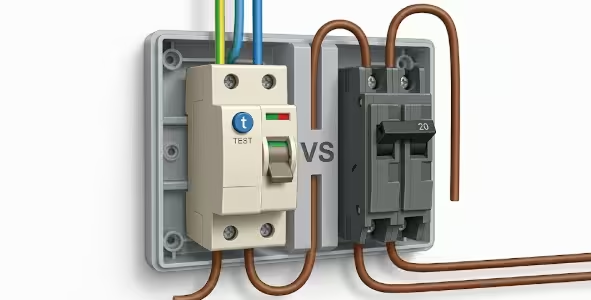
- Circuit breaker. Go to the switchboard and find the air con circuit. A breaker sitting off or halfway is tripped. Switch it fully off, then on. Try this once. A circuit breaker that keeps tripping means there’s a fault. Leave it off and call an electrician.
- Isolator switch. This is the weatherproof switch on the wall beside the outdoor unit. Kids and gardeners knock it off more often than you’d expect, and it gets missed because nobody thinks to look outside.
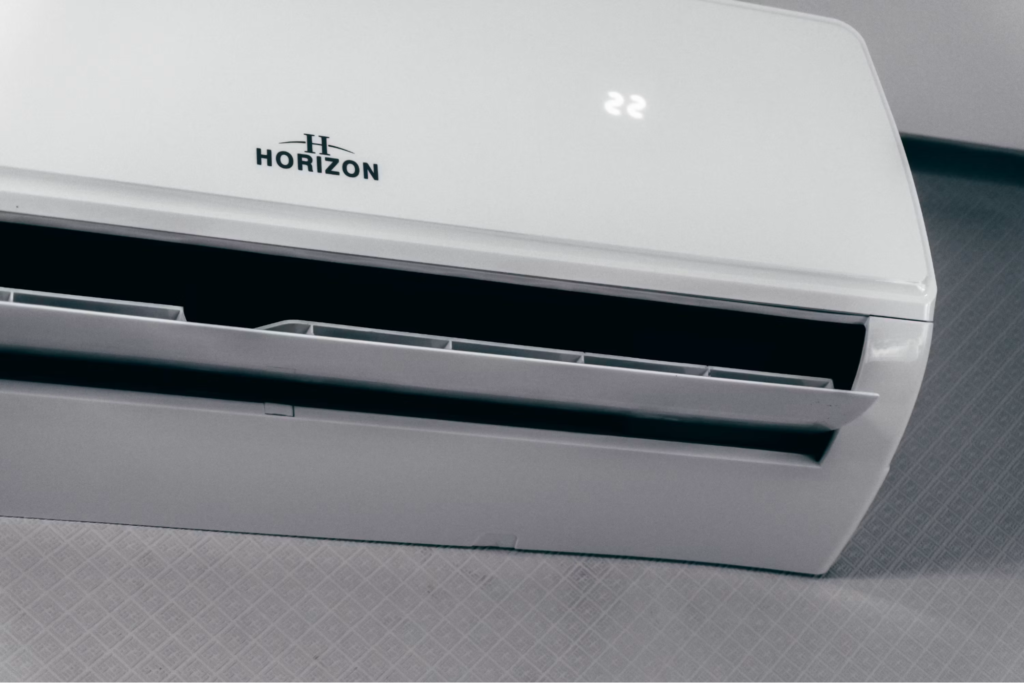
- Remote. Fit new remote batteries. Many indoor units also have a manual button under the front panel, which tells you whether the remote or the unit is the problem.
- Restart delay. Give it a few minutes after a power cut or reset. Most compressors stay off for about three minutes after stopping. Fujitsu’s service manuals call this restart prevention. A Fujitsu split system not turning on straight away may just be waiting it out.
A dark house changes the question. Check whether you’re dealing with an Evoenergy power outage or a problem at your own switchboard.
What if those checks don’t bring it back?
If your split system won’t turn on after those checks, a licensed technician will usually test the capacitor first. The compressor and fan motor need it to start. Capacitors wear out after enough hot summers, and the breaker may start tripping when they do. Don’t test one yourself. It can still hold a charge with the power off.
Frost and sun are hard on outdoor isolators. Technicians often find burnt contacts or water damage on older installs. Mice chew wiring. Thermostat sensors fail. That electrical side falls under our air conditioning electrical work, and it pays to know warranties generally exclude vermin damage.
Why is the indoor unit running but the outdoor unit isn’t?
Usually, the system isn’t calling for cooling yet. Confirm it’s in Cool mode with the set temperature below the room temperature, because the outdoor unit stays off in Fan mode. Then allow for the restart delay and check the isolator switch.
A split system outdoor unit not working after that has a fault. An outdoor fan not working, or spinning slowly and noisily, usually means the capacitor or fan motor, so switch the system off and book it in. A split system compressor not working sits at the serious end of this list, and a technician should confirm it before anyone talks about replacing the air conditioner.
On Heat, a stopped outdoor fan can be normal. Frosty Canberra mornings trigger a defrost cycle that pauses the fan and the warm air for a few minutes.
Why is my split system not cooling?
Most of the time, a split system not cooling comes down to the remote settings or a dirty filter. You can check both yourself in a few minutes. Leave a suspected refrigerant leak to a licensed technician.
Is it on the right mode?
Set the remote to Cool mode, with the temperature 4 to 6°C below the room temperature. A split system not blowing cold air is often just on the wrong setting. Fan mode moves room air around without starting the compressor. Dry mode pulls out humidity and cools only lightly, and Auto makes its own choice.
A split system blowing hot air in November has usually been left on Heat since winter.
Dropping the remote to 16°C won’t get the room there noticeably faster. The air conditioner simply runs harder for longer.
Multi-head systems add one more catch. Every head shares one outdoor unit and has to run in the same mode, so a bedroom left on Heat can stop the lounge from cooling.
How can you tell if it’s cooling at all?
Your hand won’t tell you whether a unit is blowing air but not cooling. Use a thermometer. Close the doors and give it 15 minutes in Cool mode. Outlet air should be roughly 8 to 12°C below the room temperature. Only a few degrees’ difference points to the filter first.
How to clean a split system filter
We’d do this before booking anyone. On most wall-mounted units, it takes a few minutes. Power off, front panel up, filter out. Vacuum the dust off and rinse it in lukewarm water. Put it back only when it’s completely dry. A dirty filter is also the usual reason an evaporator coil ices up.
During peak summer, that’s a monthly job. Every three months will do for the rest of the year, although bed lint and hairspray clog bedroom units faster, and Canberra’s spring grass pollen adds to it.
The coil behind the filter needs a professional clean.
Is the outdoor unit struggling?
Look at the condenser coil first. Autumn leaves collect against it in Canberra. Hose it once a season with the power off at the isolator. Your manual gives the clearance, usually 30 to 50cm on all sides.
We wouldn’t use a cover. Even purpose-made ones block airflow and do more harm than good. Shade is fine on a 39°C afternoon if air can still get around the unit.
Why is my split system freezing up?
Turn the air conditioner off. All the ice on the evaporator coil or refrigerant pipe has to thaw before you run it again. Poor airflow is the usual cause, so clean the filter while you wait. A split system icing up again with a clean filter can mean low refrigerant. Book a technician for that one.
Could the system be too small?
Only if it has never coped. A split system not cooling a room it handled well last summer hasn’t shrunk, so look for a fault. An undersized unit runs constantly and never reaches the set temperature. Big west-facing windows and thin ceiling insulation make it worse. The biggest unit isn’t automatically the answer either, because orientation and insulation decide what size air conditioner you need in Canberra.
Does a split system run out of gas?
No. Refrigerant circulates in a sealed system. It doesn’t burn off like fuel. Low gas means a leak or a pressure fault. Look for ice on the refrigerant line. Hissing and a jump in power use point to the same thing.
This is the one we’d push hardest on. A split system regas that doesn’t find the refrigerant leak means paying for the same gas again next summer. The Australian Refrigeration Council’s split system licensing fact sheet says topping up before the system is fully tested and identified leaks are repaired is illegal.
A proper gas repair has four stages. The technician recovers the remaining charge, finds and fixes the leak, pulls a vacuum, then recharges to specification. That work takes a full Refrigeration and Air Conditioning licence, because a restricted split system licence doesn’t permit service or repairs that involve refrigerant. Ask to see the ARCtick card.
Age matters here. A split system air conditioner not cooling at only a year old points to an installation fault or leak, since it hasn’t had time to wear out. Poorly made pipe connections can leak quickly, so contact your installer and check your warranty first.
Why does my split system keep turning off?
Check the timer and sleep settings first, then the filter. After that, the likely cause is the drain safety cut-out, which stops many systems when condensate can’t get away.
A blocked drain line or a dip in the line will trigger it, and a split system leaking water at the indoor unit usually shares the same cause. Leave the drain to a technician. Inverter systems also slow down near the set temperature. That’s normal if the room stays cool.
How to reset a split system
To reset a split system, turn it off at the remote, then switch it off at the circuit breaker. Wait a few minutes, restore the power and start it from the remote, allowing for the restart delay.
Treat a reset as a test. It may clear a control glitch, and that’s all it can do. Once the unit stops again, further resets won’t fix anything, so leave it off and book electrical fault finding.
What do flashing lights and fault codes mean on a split system?
Flashing lights usually mean the unit has logged a fault. Treat the code as a starting point. A technician still has to confirm the fault on site.
No universal chart exists. Split system fault codes vary by brand and often by model, so Daikin split system green light flashing and Fujitsu split system flashing lights can mean quite different things. A Daikin split system not cooling goes through the same early checks as a Mitsubishi split system not cooling. The brands part ways at split system error codes, and your manual has the list for your model.
Before you call, write down:
- which light is flashing and how many times
- the model number from the label on the indoor unit
- when it started, and whether a power cut came first
Complex faults can’t be diagnosed over the phone. Those details do improve the odds of the right parts coming on the first visit. Take a photo of the model label and keep it with the manual.
What can you check yourself, and what needs a technician?
Stop at anything that means taking a cover off. Lifting the front panel to reach the filter is fine. The right-hand column is licensed work.
You can check | Leave to a licensed technician |
Breaker position, with one reset | A breaker that trips again |
Isolator position | A burnt or water-damaged isolator |
Remote batteries and mode | Control boards and sensors |
Filter clean | Evaporator coil clean |
Clear space around the outdoor unit | Capacitor, fan motor and compressor |
Thawing an iced coil | Refrigerant leak repair and regas |
The flashing light pattern | Diagnosing the fault code |
Should you repair or replace a split system?
Repair usually makes sense for a younger system with one clear fault. At 10 to 15 years, breakdowns tend to come more often, and that’s when we’d start discussing replacement. Poor maintenance can bring that forward by several years.
Being overcharged or upsold is a fair concern. A capacitor is a small part, but you’re also paying for a licensed person to find the fault and discharge it safely. Nobody can quote accurately until that’s done.
If a new system is being recommended, ask what failed and how they confirmed it.
Need split system repairs in Canberra?
Watts Needed is a family-owned electrical business based in Googong, working across Canberra and the surrounds. Call 0440 138 246 or contact our team with your model number and whether you have a split system that’s not cooling or one that won’t start at all. We’ll check the power supply and wiring first, then tell you plainly what the fault is and what’s worth doing about it.
Split system FAQs
Why is my split system not working after a power cut?
Why is my split system blowing warm air on Cool?
How often should a split system be serviced?
Can an electrician fix a split system?
An electrician can deal with the power side: the circuit, isolator, wiring and repeated trips. Anything that involves opening the refrigerant circuit needs a technician with a full ARC licence, whatever other licences they hold. If the air con is completely dead, start with an electrician.